Built around your payday — and the money that's already promised.
What you spend here, what you owe back home, and what's actually left.
Your money doesn't reset on the 1st. Neither does this.
Two decisions sit underneath everything else, and both are why a general-purpose budget can't quite be talked into this job.
The month begins when you get paid
Pick your pay day once. From then on "this month" means the stretch between one salary and the next — not a calendar you don't get paid on.
Money owed elsewhere is not a spending category
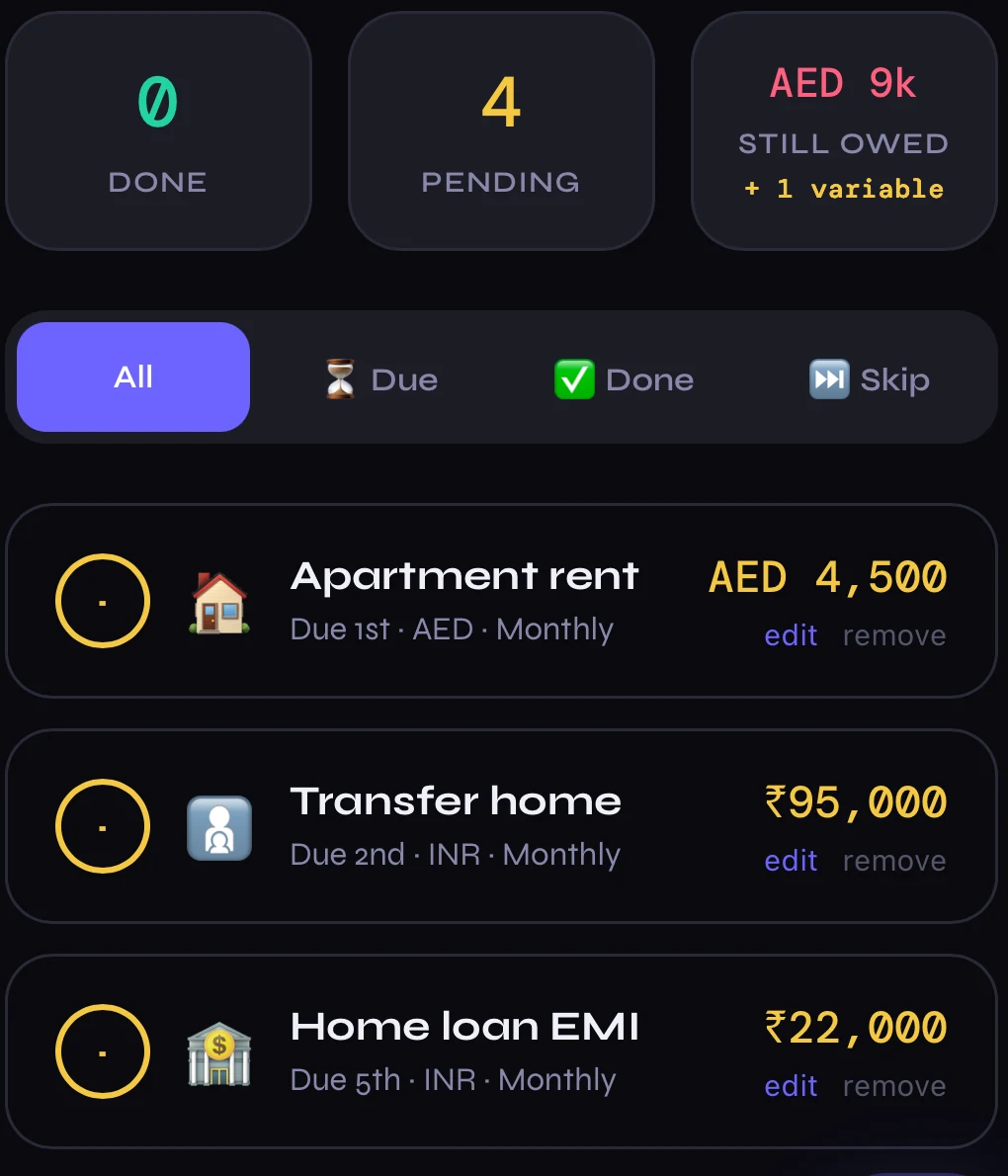
Rent back home, a sibling's fees, an EMI — these aren't discretionary and don't belong in a pie chart next to coffee. What's left is calculated after them.
A running total of what you still owe this cycle.
The total converts. The items don't pretend.
Enter the real figure each cycle. Last cycle's shows as a hint, never prefilled.
Pick the month a premium is due and it appears in that cycle only.
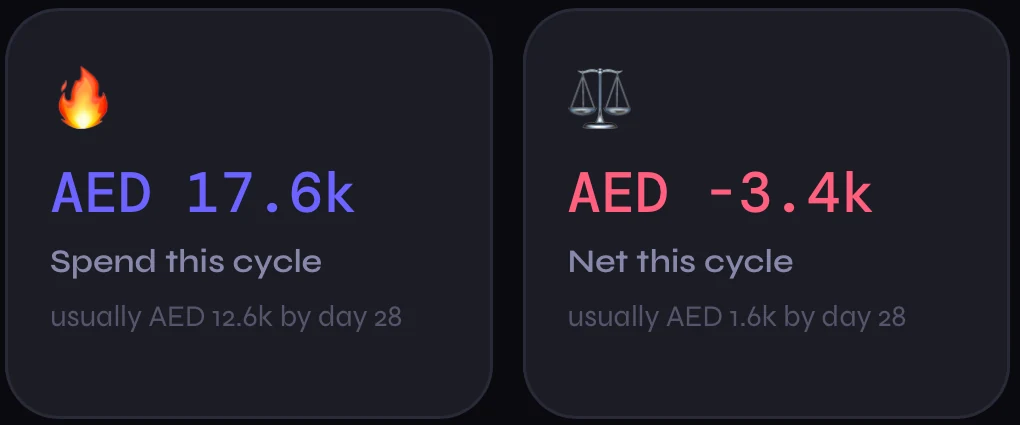
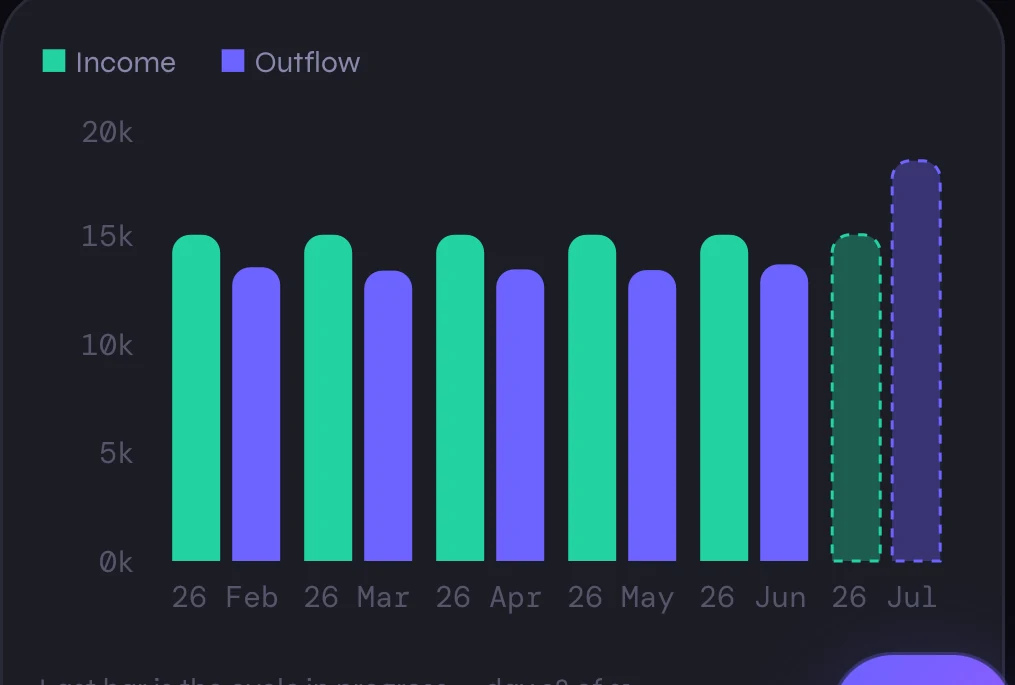
Measured against your own normal, not a budget you set once.
Day 28 against day 28 of the last six — never a part-cycle against a whole one.
Under two completed cycles, every comparison reads as a dash.
Built by someone using it on their own money, every day.
Nothing here is a mock-up waiting on a roadmap.
- Loans, insurance, subscriptions— each with their own screen and their own currency
- Paste a bank SMS— amount, merchant and category are read out of it, in your browser
- Saving isn't spending— flag any category as savings and it stops counting as consumption
- Installs like an app— add to home screen, full-screen, its own icon — no store
Anyone earning in one country while money is owed in another — remittances, a loan, a policy, a family.
Home-side categories are set up from the start. The rate is fetched automatically and frozen onto each entry at its own date, so today's rate can't rewrite last quarter.
Four claims you can verify in about thirty seconds.
This is a finance app asking for a picture of your salary. Every promise below is written into the privacy policy, and every one is the kind you can test rather than take on faith.
No analytics. No trackers. No third-party scripts.
Not "we anonymise it" — there is nothing to anonymise. Open your browser's network tab and check.
Your browser never contacts the rate provider
Exchange rates are fetched server-side and passed on. The provider never sees you.
Export everything, any time
Two CSV files — every transaction, and every record you've saved. Free, and they open straight in a spreadsheet.
Delete your account yourself
From inside the app, without emailing anyone or giving a reason. Both exports are offered on the way out.
Free, with no ads.
A paid tier may come later. If it does, the export won't be behind it — charging you for the ability to take your own data and leave is not a thing this app will do.
Create an account